Interview
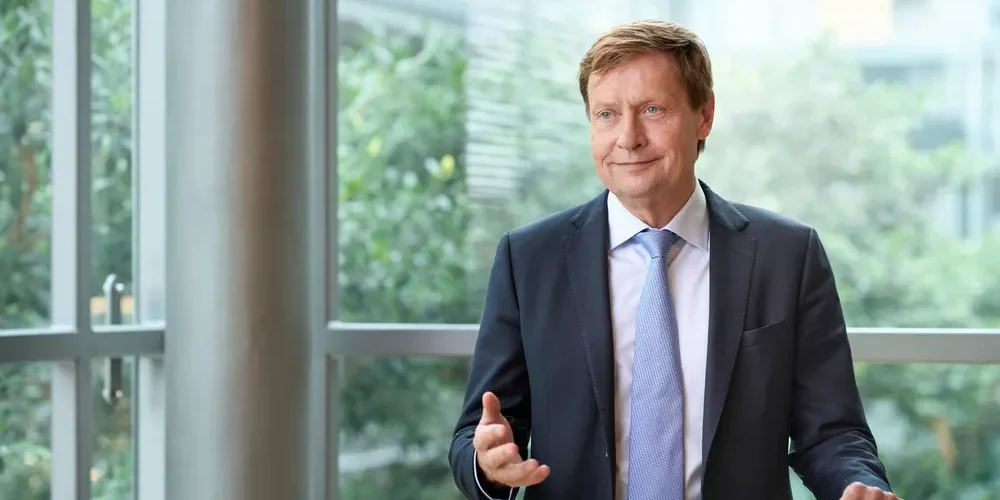
In Conversation with Thomas Thune Andersen, Chair of Lloyd’s Register Group
Thomas Thune Andersen is one of the most seasoned and respected voices in the global maritime and energy sectors, known for his strategic vision, strong governance credentials and unwavering commitment to sustainability and the energy transition. Over more than four decades, he has led and advised some of the world’s most influential organisations - including his decade as Chair of Ørsted A/S (2014–2024), where he oversaw the company’s transformation into a global renewable energy powerhouse, and as former Chair of VKR Holding A/S, a foundation-owned group that dedicates a significant share of its profits to philanthropic purposes.
A Dane by background, Andersen spent over 30 years with A.P. Moller-Maersk, rising through senior leadership positions to become CEO of Maersk Oil. His career has spanned shipping, oil and gas, renewables and infrastructure, consistently marked by his ability to guide companies through transformation while keeping a clear eye on long-term value creation.
Today, he chairs Lloyd’s Register Group Limited and Lloyd’s Register Foundation, alongside serving as Non-Executive Director at IMI plc, BW Group Limited and Lambert Energy Advisory. Beyond his corporate leadership, he plays a prominent role in shaping the global sustainability agenda as a member of the Friends of Ocean Action, the Energy Transitions Commission and the Danish Committee on Corporate Governance.
Andersen champions innovative solutions for climate and ocean policy, from advancing water policy to promoting blue bonds as a tool for sustainable finance. Interestingly, he is also a Freeman of the City of London, technically giving him the right to drive sheep and livestock over London Bridge! For now, we’ll stick to blue bonds rather than livestock as we dive into questions about sustainability, finance and the future of a commercially viable ocean.
Ørsted’s transformation under your leadership is often cited as one of the most successful corporate turnarounds in the energy sector. What do you see as the core pillars of a successful transition strategy for legacy energy companies seeking to compete in a low-carbon world?
A successful transition must, first and foremost, be driven by a shared aspiration and dream across the whole organisation. As a leader of such a transition, one must be an engaged storyteller, passionately describing both the desired outcome and the journey at every junction. After this, well-defined milestones must be transparent and well communicated.
For Ørsted’s transition the dream and the aspiration was “believing in a world eventually running entirely on green energy”.
Having led across sectors from oil and gas to renewables and shipping, what do you believe are the biggest blind spots organisations face when navigating such fundamental industry shifts and how can leaders anticipate them?
When industries go through fundamental change, it’s tempting to see transformation through the lenses of technology, regulation or capital. In my experience, the biggest blind spot is rarely technical. It’s human.
If we fail to recognise this human dimension, we risk undermining the progress we seek. Seafarer training, safety and well-being must rise on the strategic agenda and investment in people must go hand in hand with investment in technology. The Global Maritime Trends 2050 Report notes that AI tools like SeaGPT and XR-based training are improving safety, connectivity and mental health through real-time communication and immersive learning.
Leadership must anticipate this human element. We should involve seafarers early, listen to their experience and design safe systems that reflect real work on board. That means embedding a “just culture” where learning is encouraged and leadership visibility is ensured.
Shipping and energy are facing two big changes: cutting carbon emissions and going digital. Where do you see the biggest opportunities for growth and where are the pit-falls for companies making that transition?
Decarbonisation and digitalisation are converging to redefine how we design, operate and finance the global fleet. The greatest opportunity in this twin transition lies not in any single fuel or digital platform but in integrating safety, sustainability and technology into a coherent strategy.
Shipowners, operators and energy companies are looking for clarity amid uncertainty. They need to understand not only what is technically feasible, but what is safe, investable and future-proof. By combining engineering expertise with digital tools, we can help the industry transition safely and credibly. The rise of digital twins, AI-driven maintenance and real-time emissions monitoring is transforming how assets are designed, operated and maintained. Data can be the bridge between ambition and action.
However, transitions of this scale rarely move in straight lines. The risks are as significant as the opportunities. The most immediate is fragmentation — of fuels, regulation and technology. After years of pilot projects and policy uncertainty, many operators struggle to see a clear business case for change. As more decisions are driven by algorithms and emissions models, credibility becomes a strategic asset.
Through Lloyd’s Register Foundation’s alliance with the World Economic Forum on nature-positive ports, how can partnerships like this help the maritime industry scale sustainable solutions faster and how do you ensure that commercial growth remains aligned with purpose and long-term societal value?
Partnerships help scale and accelerate impact through shared resources, global networks and leveraged funding. This long-term partnership between Lloyd’s Register Foundation and the World Economic Forum will connect better practices for nature with safer port operations, supporting healthier ecosystems and opening access to new capital for nature- and people-positive approaches.
Ports are economic hotspots, enabling 90% of global trade and supporting millions of jobs. Research shows the sector can unlock major business opportunities by 2030 by prioritising clean energy, circular economy models and nature-positive strategies. Achieving this requires a transition that restores and enhances the natural environment while keeping ports efficient, resilient and responsible — creating long-term value for the economy, communities and the planet.
To align commercial growth with societal value, the answer lies in purpose-led performance. Partnerships like the nature-positive ports alliance show what’s possible when purpose drives collaboration. By linking science, industry and community outcomes, sustainability becomes not a niche initiative but a shared foundation for the future of global trade.
Blue bonds and ocean finance are emerging as key instruments in the sustainability transition. What governance and credibility frameworks are essential to scaling these initiatives while maintaining investor confidence?
Blue Bonds can align financial returns with long-term ocean and climate goals. At Ørsted, our offshore renewable energy blue bond showed that well-designed instruments can fund biodiversity-positive wind farms, cleaner maritime operations and commercial growth. Yet the ocean, which underpins global prosperity, receives less than 0.01% of global capital despite its potential to provide more food, energy and up to 35% of required emissions reductions. This gap is a significant investment opportunity.
Investor interest is accelerating, from DP World’s blue bond to emerging blue bond funds. Scaling a blue capital market requires clear taxonomies, harmonised standards and transparent impact reporting. The ICMA Blue Bond Guidance is a critical milestone, defining sustainable ocean use and strengthening investor confidence. Frameworks such as the TNFD and SBTN further clarify impact.
AI analysis reveals a large “unlabelled” pipeline of ocean-related sustainable bonds, reflecting issuers’ awareness of the opportunity. As CEOs and financiers recognise the ocean as a USD 15 trillion economy and a key climate lever, blue finance can scale — unlocking capital for resilient ocean infrastructure, coastal protection and biodiversity restoration.
From your experience, at what stage of a transaction do you see the greatest value in engaging external partners like Deheza, particularly when it comes to anticipating risks and shaping strategic directions? And, in your view, what makes Deheza’s approach distinctive when helping organisations navigate sustainability challenges and complex stakeholder environments?
An external partner like Deheza can and will bring value to a transaction at different stages of the process. At an early stage, the partner can help identify the challenges and opportunities a company will face — i.e. they will be part of defining the challenge. Such a partner can later become more involved in the details of the strategic plan and act as the external eyes that monitor the wider environment. In some cases, an external partner like Deheza can also identify public decision-makers and other relevant partners for the transaction.
Important Notice
While the information in this article has been prepared in good faith, no representation, warranty, assurance or undertaking (express or implied) is or will be made, and no responsibility or liability is or will be accepted by Deheza Limited or by its officers, employees or agents in relation to the adequacy, accuracy, completeness or reasonableness of this article, or of any other information (whether written or oral), notice or document supplied or otherwise made available in connection with this article. All and any such responsibility and liability is expressly disclaimed. This article has been delivered to interested parties for information only. Deheza Limited gives no undertaking to provide the recipient with access to any additional information or to update this article or any additional information, or to correct any inaccuracies in it which may become apparent.